"Exploration, Hope, and Consequence"
How the “New World” Got Its Name
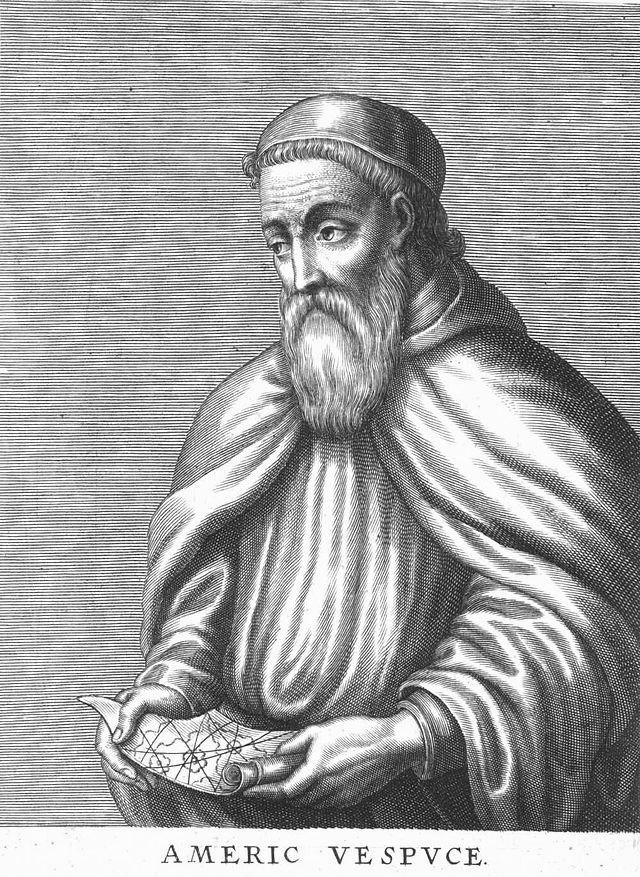
The term “New World” (Latin: Mundus Novus) refers to the lands of the Western Hemisphere, mainly the Americas. It was first introduced in the early 16th century during Europe’s Age of Discovery by the Italian explorer Amerigo Vespucci. In his pamphlet Mundus Novus, Vespucci explained that the territories discovered west of the Atlantic Ocean were not part of Asia, as many had believed, but were actually new continents.
This discovery greatly changed European understanding of the world. Until then, geographers thought the Earth consisted of only three continents—Africa, Asia, and Europe—collectively called the “Old World.” Vespucci’s conclusion expanded this limited view, showing that the planet was larger and more diverse than previously imagined. The term “New World” thus marked a major shift in global geography and opened the way for further exploration and discovery across the Atlantic.
Mundus Novus:
The term “New World” (Mundus Novus) was first used in the spring of 1503 by Amerigo Vespucci in a letter to his friend and former patron, Lorenzo di Pier Francesco de’ Medici. The letter was later published in Latin between 1503 and 1504 under the title Mundus Novus. In it, Vespucci clearly stated for the first time in print that the lands discovered by European explorers to the west were not part of Asia, as Christopher Columbus believed, but rather a completely different continent, a “New World.”
According to the letter, Vespucci realized he was in a new continent on August 17, 1501, when he arrived in Brazil. He compared the land and people there to what Portuguese sailors had told him about Asia. During a stop at Bezeguiche, near present-day Dakar in Senegal, Vespucci met ships from the Second Portuguese India Armada returning from India. This meeting was important, as it made Vespucci more aware of the differences between the regions he had explored and the actual East Indies.
Having already traveled to the Americas in earlier years, Vespucci found it hard to match his experiences in the West Indies with what he heard about Asia. While anchored at Bezeguiche, he wrote an early letter to Lorenzo, expressing confusion after these conversations. He sent the letter back with the Portuguese fleet. However, his full conviction came during his mapping expedition along Brazil’s eastern coast from 1501 to 1502.
After returning to Lisbon in early 1503, Vespucci wrote the Mundus Novus letter. In its opening, he described the newly explored countries as a “new world” unknown to the ancients. He argued that earlier beliefs about the southern hemisphere being mostly ocean were wrong. Based on his journey, he claimed to have discovered a large continent in the southern part of the world, full of animals, densely populated, and even more pleasant and temperate than Europe, Asia, or Africa.
The letter became a publishing sensation and was widely reprinted across Europe. Around the same time, historian Peter Martyr also helped spread the idea of the Americas being a separate world. He often receives joint credit with Vespucci and later titled his work Orbe Novo, or “New Globe,” first published in 1511.

The “New World” as a Symbol:
The term “New World” came to represent far more than geography. For Europeans during the Age of Exploration, it symbolized hope, discovery, and opportunity. The Americas appeared as a place of endless possibilities—rich in resources and full of promise for new beginnings. Explorers and settlers viewed it as a land where they could seek wealth, freedom, and adventure, while missionaries saw it as a region to spread Christianity and European culture.
However, this idea reflected a European perspective. Long before 1492, millions of Indigenous peoples had lived across the Americas, building advanced civilizations such as the Aztecs, Incas, and Mayans. To them, these lands were not “new” but their ancestral homes. The arrival of Europeans brought massive changes—new technologies and trade, but also disease, conquest, and cultural disruption.
Thus, the “New World” became a symbol of both possibility and loss: a new beginning for some and the end of an old world for others. It marked the start of global connections that would forever alter history, linking continents and cultures in ways never before imagined.
Modern Meaning: